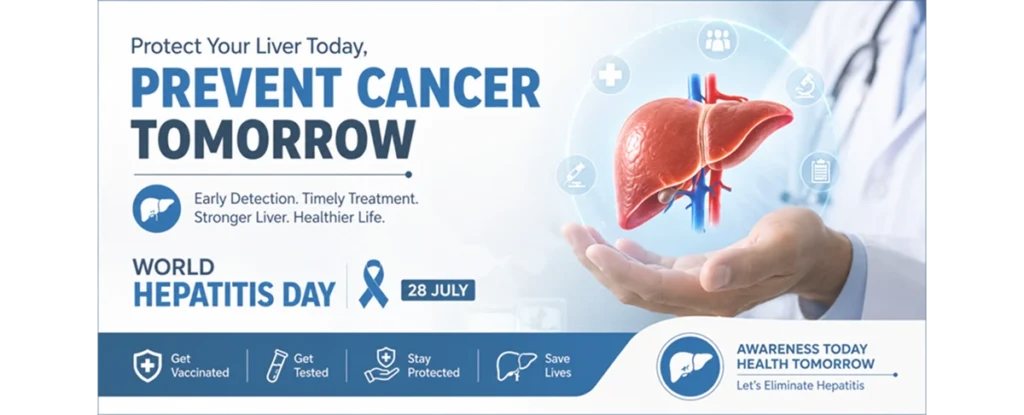
Hepatitis: Protecting Your Liver Today Can Prevent Cancer Tomorrow

Dr Neeraj Chaudhary
Senior Director & HOD
GI surgery, GI oncology & Robotic surgery
Hepatitis – More Than Just a Liver Infection
The liver is one of the most vital organs in the human body, responsible for digestion, metabolism, detoxification, and storing essential nutrients. When the liver becomes inflamed—a condition known as hepatitis—its ability to function gradually declines. While hepatitis may appear to be a simple infection, untreated disease can silently progress to irreversible liver damage and even liver cancer.
Hepatitis can result from viral infections (Hepatitis A, B, C, D, and E), excessive alcohol consumption, fatty liver disease, autoimmune disorders, or certain medications. Among these, fatty liver disease is becoming most prevalent in the population & has emerged as the most common cause of liver failure.
Why Timely Diagnosis Is Critical
One of the greatest challenges with hepatitis is that many patients remain symptom-free for years. By the time symptoms such as jaundice, persistent fatigue, abdominal swelling, unexplained weight loss, or loss of appetite develop, significant liver damage may already have occurred.
If left untreated, chronic hepatitis can progress through stages of liver fibrosis and cirrhosis, ultimately increasing the risk of hepatocellular carcinoma (liver cancer)—one of the leading causes of cancer-related deaths worldwide.
Early diagnosis through blood investigations, liver function tests, viral marker testing, FibroScan, and advanced imaging plays a crucial role in preventing these complications.
Modern Advances in Hepatitis Management
The treatment of hepatitis has evolved significantly over the last decade. Today, many patients can benefit from highly effective antiviral medications that suppress or eliminate the virus, preventing further liver damage.
Equally important is regular surveillance of patients with chronic liver disease. Advanced diagnostic techniques such as high-resolution MRI, multiphase CT scans, endoscopic evaluation, and image-guided liver biopsies help specialists detect complications at an early and treatable stage.
Patients with advanced liver disease require multidisciplinary care involving gastroenterologists, hepatologists, radiologists, and hepatobiliary surgeons to ensure the best possible outcomes.
Prevention Remains the Best Treatment
Despite remarkable advances in treatment, prevention continues to be the most effective strategy against hepatitis. Vaccination against Hepatitis A and B, safe food and water practices, avoiding the sharing of needles or personal hygiene items, and regular screening for high-risk individuals can substantially reduce the burden of liver disease.
Fatty liver disease can be prevented by lifestyle modifications which includes dietary modifications and regular exercises for 30-45 minutes.
Individuals with chronic hepatitis should undergo periodic follow-up to monitor liver health and detect complications before they become life-threatening.
World Hepatitis Day: A Call for Awareness and Action
Observed every year on 28th July, World Hepatitis Day serves as a global reminder that viral hepatitis remains a major public health concern. The campaign encourages people to get tested, complete recommended vaccinations, seek timely medical care, and understand that early intervention can prevent liver failure and liver cancer.
As a Gastroenterology & GI Oncology Surgeon, I believe that awareness, early diagnosis, and access to advanced medical and surgical care are the strongest tools we have against hepatitis. Protecting your liver today is an investment in your future health. Don’t wait for symptoms—early action can save your liver, and in many cases, your life.