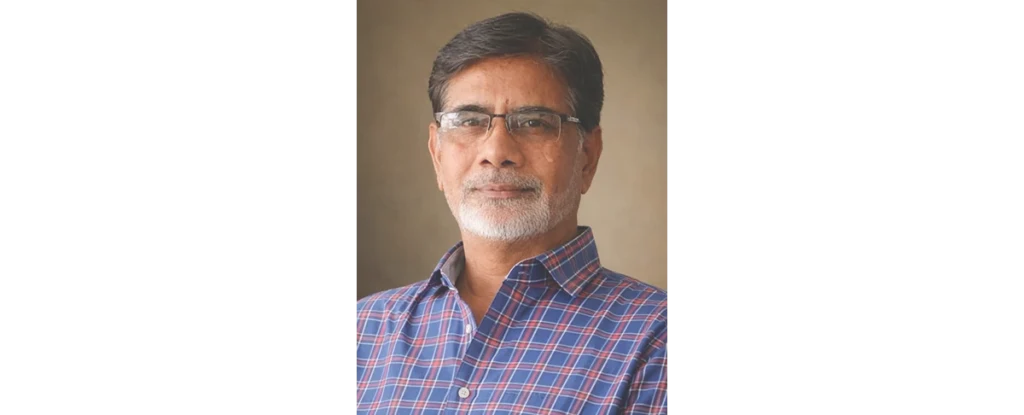
Prakash Deshmukh: The Artist Who Brought Digital Art to India Before Anyone Called It Art
From a Young Boy in Akola to a Lifelong Love Affair with Art
Some artists discover their medium early and spend a lifetime perfecting it. Others spend a lifetime reinventing themselves. Prakash Deshmukh belongs to the second category.
Born in 1962 in Akola, Maharashtra, Deshmukh’s relationship with art began long before he knew what an artistic career could look like. As a young boy, he would finish his schoolwork and instinctively reach for a pencil or paintbrush. Art was never a conscious career choice; it was simply a part of who he was. What started as childhood curiosity slowly became a lifelong pursuit that would eventually place him among the pioneers of Indian digital art.

How Two Decades in the Indian Air Force Became an Unplanned Art Education
The first chapter of his story unfolded in an unlikely setting—the Indian Air Force.
Armed with a postgraduate qualification in Avionics Engineering, Deshmukh spent nearly two decades serving the nation. For many, military life might have pushed artistic ambitions into the background. For him, it became an unconventional art school. Every posting across India and abroad offered a new lesson. Every city introduced him to different galleries, artistic traditions, and creative influences.
While fulfilling his responsibilities in uniform, he continued painting relentlessly. Watercolours, acrylics, oil on canvas, mixed media, and collages became part of his expanding artistic vocabulary. From 1984 to 2000, he created hundreds of works, primarily in oils, which formed the foundation of his early career. Over the years, he participated in exhibitions organized by AFWWA, AIFACS, BAS group shows, and various art institutions alongside established artists.
Looking back, those Air Force years were not a detour from art—they were the foundation of it.
The Retirement That Sparked a Revolution Rather Than an Ending
Then came the turning point.
When Deshmukh retired in October 2000, many expected him to devote himself entirely to traditional painting. Instead, he chose a path few artists of his generation were willing to explore: digital media.
At the beginning of the new millennium, digital art was not widely accepted in India’s art circles. Traditional painting dominated galleries, collectors, and critical conversations. Computer-generated artwork was often viewed as technology rather than art.
Deshmukh saw something different.
The Devta Series, the Bhuj Tragedy Series, and the Birth of a Digital Art Pioneer
What followed was one of the most significant yet under-recognized chapters in contemporary Indian art.
In 2002, he presented one of India’s earliest solo digital art exhibitions at Kalidas Kaladalan, Akola. Featuring the groundbreaking Devta Series and the emotionally powerful Bhuj Tragedy Series, the exhibition challenged conventional ideas about artistic creation and legitimacy.
The Devta Series was particularly remarkable. Drawing inspiration from India’s folk and tribal traditions, Deshmukh used digital tools to reinterpret timeless representations of divinity. Ancient cultural imagery met emerging technology, creating a visual language that felt both rooted and futuristic.
The Bhuj Tragedy Series demonstrated another side of his artistic vision. Responding to one of India’s most devastating natural disasters, the works captured grief, resilience, and collective memory through a medium that many still refused to acknowledge as fine art.
The exhibition later travelled to additional galleries, including Rama International in Sambhajinagar and Nashik, helping establish digital art as a serious artistic medium at a time when much of the Indian art establishment remained skeptical.
Building Credibility for Digital Art When the Art World Was Not Ready
The challenge was not simply creating the work – it was convincing audiences that the medium itself deserved recognition.
For an artist based in Akola rather than Mumbai or Delhi, the task became even more difficult. There was no established ecosystem for digital art, no blueprint to follow, and few examples to learn from. Yet exhibition after exhibition, artwork after artwork, Deshmukh continued building a case for digital art through the strength of his practice rather than through argument.
Today, more than two decades later, that decision appears remarkably visionary.
Recognition Earned Through Consistency, Courage, and Creative Excellence
Over the years, Deshmukh’s contributions have been recognized through exhibitions, awards, and leadership roles within the art community. His participation in AIFACS annual exhibitions in New Delhi, AFWWA First Prize recognition, curatorial responsibilities, and invitations to serve as a juror and judge at national exhibitions reflect the respect he has earned through decades of dedication.
Yet for Deshmukh, recognition was never the destination. The work itself remained the driving force.
The #100Days_100Artworks Project and a New Chapter of Artistic Reinvention
Perhaps the most inspiring part of his story is happening now.
Many artists spend their sixties reflecting on past achievements. Deshmukh seems more interested in creating the future. His recently completed #100Days_100Artworks project stands as proof. For one hundred consecutive days, he shared original artworks publicly, creating not just a body of work but a living archive of four decades of artistic evolution.
The series was not an exercise in nostalgia. It was a declaration that creativity remains an ongoing journey. It demonstrated that artistic energy is not measured by age but by curiosity and commitment.
Connecting the Past and the Future Through the Ancient Pottery Series
His latest explorations, including the Ancient Pottery Series Limited Edition Prints, continue to bridge past and present—reimagining themes and visual ideas first explored in acrylic paintings from 1996 through contemporary digital techniques in 2026.
This final series completes the chronological journey of his work:
- Oils and traditional mediums (1984–2000)
- Devta and Bhuj digital series (2001–2002)
- Ancient Pottery Series (2026 and ongoing)
The series offers collectors a tangible connection to the evolution of an artist who has never stopped experimenting, learning, and adapting.
A Legacy Still Being Written
The motivation behind all of this has remained surprisingly simple.
The mediums have changed. The technology has evolved. The exhibitions have grown larger. But the impulse remains the same as it was for the ten-year-old boy in Akola who reached for a pencil after finishing his homework: an irresistible need to create.
Today, Prakash Deshmukh is not merely preserving a legacy. He is documenting a movement he helped pioneer, expanding the possibilities of digital art, and proving that artistic reinvention has no age limit.
His story is ultimately not about technology, galleries, or awards. It is about curiosity, courage, and the rare willingness to begin again when most people choose comfort. Twenty-five years after he took that leap into digital art, the art world has finally caught up with the vision he saw long ago.
And perhaps that is the true mark of a pioneer—not that they follow the future, but that they create it long before everyone else can see it.
Connect with Prakash Deshmukh
📧 Email: prakash.d.deshmukh@gmail.com
📱 Call / WhatsApp: +91 99702 18014
📷 Instagram: @prakash_deshmukh_an_artist
📘 Facebook: Prakash Deshmukh Art
(https://www.facebook.com/share/14dPUxZHAW8/)